Stroke treatment begins with urgent hospital care. Rehabilitation follows once the clinical team considers it appropriate, helping people regain as much everyday independence as possible. Physiotherapy after stroke addresses movement within a broader plan that may also include communication, swallowing and daily activities.
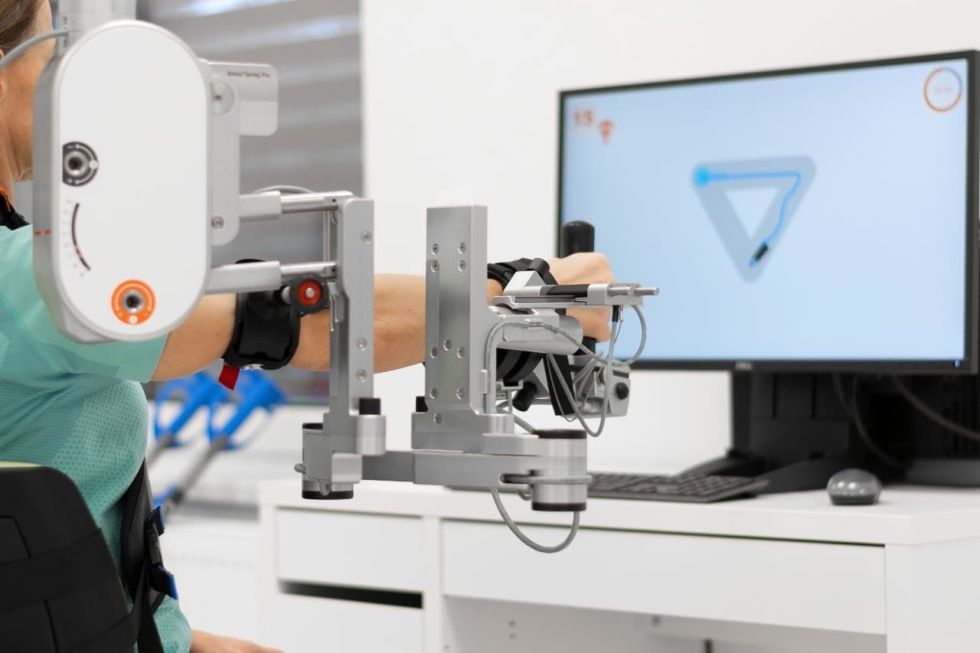
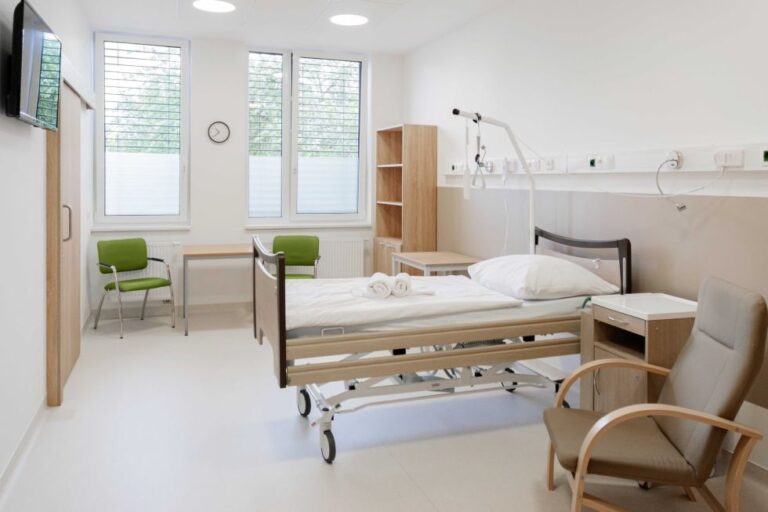
This article supports informed planning, not diagnosis, medication selection or an individual exercise prescription. The photographs are genuine images from a rehabilitation setting; they do not establish that the person pictured has had a stroke or that the equipment suits every patient.
Stroke treatment and rehabilitation are different stages
A stroke affects brain function when its blood supply is disrupted. An ischaemic stroke involves a blockage, while a haemorrhagic stroke involves bleeding. The hospital establishes the type and appropriate treatment; symptoms alone cannot safely distinguish them.
Selected people with a blockage may receive clot-dissolving medication or a procedure to remove the clot, subject to specialist assessment and eligibility. Physiotherapy addresses movement difficulties after stroke. It does not dissolve a clot or replace emergency treatment or prescribed medication.
The importance of physiotherapy after stroke
Stroke can leave one-sided weakness and difficulties with balance, transfers or walking. Goal-directed rehabilitation practises functions that matter in everyday life, rather than relying on a general promise to “strengthen the body”.
- Transfers and mobility: appropriate practice in changing position, moving between bed and chair, and standing.
- Balance and walking: safe tasks matched to ability, with assessment of assistance or mobility aids.
- Arm and hand use: functional practice involving reaching, grasping and suitable everyday activities.
- Practice beyond appointments: a clear home plan and caregiver instruction from the treating team.
Equipment may be one component of a selected plan. It is not a measure of quality on its own and does not guarantee improvement. The featured photograph shows upper-limb training, not a recommendation for a particular device.
When should rehabilitation start?
Recovery planning begins in hospital. The clinical team determines when and how much movement is appropriate after checking medical stability. Appropriate early rehabilitation does not mean forcing someone to walk or undertake strenuous unsupervised exercise.
Ask for the plan to document current assistance needs, goals, activities and review dates. Instead of “improve walking” alone, the team might agree a suitable distance or level of assistance. Rehabilitation guidance supports needs-based input across several disciplines; it should not be interpreted as a fixed daily physiotherapy dose for every individual.
A team approach, with the family involved
Occupational therapy may address dressing and personal care, while speech and language therapy can address communication and assess swallowing. Psychological or cognitive support may also be needed alongside doctors, nurses and physiotherapists. Assessment determines the relevant input; a movement session cannot cover all these needs.
Request practical caregiver training, written instructions for home and a clear contact for problems. Do not pull a weakened arm or copy online exercises without suitable instruction from the team.
How long does recovery take?
Recovery varies substantially. Some people improve over weeks, while others need months or years and ongoing support. No stay length or recovery percentage can be guaranteed for everyone. Time since stroke alone should not replace an individual discussion about reassessment.
Track meaningful changes: how much help is needed, ease of transfers, activity tolerance and everyday tasks. Keep the initial assessment and review notes. If progress is slow, discuss whether goals should change. Pain, fatigue, mood and the home environment deserve attention rather than automatically adding more sessions.
Medication and reducing the risk of another stroke
Medical follow-up and management of risk factors remain part of ongoing care. Medication depends on the cause of stroke and individual circumstances. Do not stop prescribed treatment or start aspirin or a blood thinner yourself. Ask your doctor for a personal follow-up, activity and prevention plan.
Choosing a rehabilitation programme and preparing reports
- Prepare the discharge summary, stroke date and documented type, available investigation results, medicines and allergies.
- Describe mobility, communication, swallowing and everyday care needs, including nursing or caregiver support.
- Request written details of available disciplines, individual and group sessions, treatment days and progress measures.
- Confirm accommodation equipment, required assistance, emergency arrangements and follow-up after returning home.
- Ask the treating doctor whether travel and the proposed transport are appropriate. Programme acceptance is not medical clearance to travel.
Do not postpone available local rehabilitation while waiting for a trip. Health Back coordinates agreed options and arrangements; it does not provide clinical treatment or guarantee acceptance or outcomes.
Frequently asked questions
Does physiotherapy treat the clot itself?
It addresses movement and function during rehabilitation. It does not dissolve the clot or replace acute hospital care.
Can walking return after a stroke?
Walking may improve to different degrees, but the outlook requires individual assessment. Photographs or a brief description cannot establish a guaranteed result.
Do more sessions always mean a better outcome?
The plan should match goals, ability and tolerance. Ask how sessions are selected and reviewed rather than comparing appointment numbers alone.
What if new symptoms appear during rehabilitation?
Seek emergency help immediately if another stroke is suspected. Do not wait for the next appointment or an online message.
Arrange the next step through Health Back
For medically stable people exploring rehabilitation arrangements, request a case-file assessment through Health Back or contact Czech WhatsApp: +420 774 091 060. Explore the Health & Medical Tourism Guide. These channels are not emergency services.
Sources and limitations
Sources were checked editorially on 20 October 2026; this is not an individual clinical review. The medical references below are not spa booking pages. No spa telephone numbers, addresses or directions are included.